





200 years no gospels | 24 other thrones besides Jesus' | Jesus' problematic hyperboles: made sinful lawful and lawful sinful | Jesus was created | What's new | A-Z library (3300+ articles) | "Muslims" was the original title | Quran Search | Quran Moral Code (100s of them) | Quran: Bibles are filled with corrupt قول qaowl (doctrines of sayings and writings. See also Hafs vs. Warsh Quran) | "bar Allahin" in Daniel 3:25-26 means the chosen one of Allah | Jesus said he was powerless | Paul said he wasn't sure about Holy Spirit | Disciples called each other liars, satanic, false | Paul commanded women to not expose sex predators | Research & Blog | 9/11 Israel-lie | Youtube | 
 | Jesus replaced Satan: (Ezekiel 28:13-19)
Where was the promised Holy Spirit in the disciples' apostatizing of each other.
The Romans had to crucifixion fake his crucifixion due to Passover issues: [1]
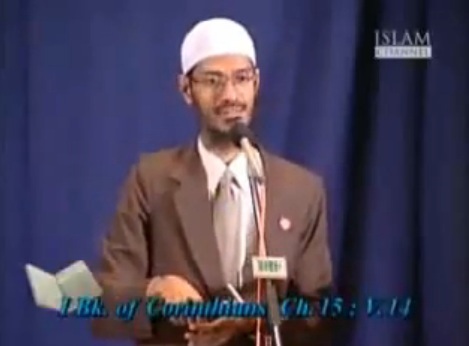

AUDIOs from Dr. Zaghlool Al-Najjar
Lack of Oxygen and low air pressure in space.
The constant reduction of earth's size: The earth used to be 200 times bigger!
Iron was sent down to earth from space.
The origins of the Universe, Big Bang theory, Cosmic Crunch, and the creation of the SECOND EARTH after the second Big Bang in the Noble Quran and Science. Also, Dr. Zaghlool's scientific explanation of the earth and heaven coming to Allah Almighty "willingly or unwillingly" and how each celestial object behaves differently depending on its mass.
The Cosmic Crunch and the creation of the second Universe and second earth.
Time and the Speed of Light precisely calculated and mentioned in the Noble Quran.
The breathing cycle during the day on planet earth by the plants, humans and animals - mentioned in the Noble Quran and confirmed by Science!
The sections of this article are:
1- Allah Almighty's Promise in the Noble Quran, to show us His Divine Miracles through His Holy Book.
(a)- Few examples that prove my claims.
2- Allah Almighty's Swear and Claim in Noble Verses 81:17-18.
(a)- The Noble Verses along with Dr. Zaghlool Al-Naggar's Scientific proofs.
(i)- The expansion and contraction of the Ozone layer during the sun's rising and setting.
(b)- More proofs from Arabic.
(c)- What does It mean?
(d)- The Prophet was thought of to be a "mad man".
(e)- No blind faith in Islam.
3-
The breathing of the
plants, humans and animals during the day V.S during the night.
- Proving the Arabic Word using the Arabic-to-English and English-to-Arabic Google Translation, along with the ample English translations of Noble Verse 81:18 (see Article #1 in the section).
4- Conclusion.
1- Allah Almighty's Promise in the Noble Quran, to show us His Divine Miracles through His Holy Book:
(See section #2-a below for the Noble Verses that deal with this article's topic)
The sub-sections here are:
(a)- Few examples that prove my claims.
The Noble Quran is filled with scientific statements and notions. These are statements of Allah Almighty describing how He created things on earth and in the Universe. What's most amazing is that all of these scientific statements and notions had been proven to be in perfect agreement with science and our modern-day scientific discoveries. Allah Almighty made the Noble Quran be Prophet Muhammad's (peace be upon him) Everlasting Divine Miracle and proof for Prophethood. The Holy Book certainly stood the test of time 1,500 years ago with Its Claims, Prophecies and Miraculous language eloquence, and it does again and again in our day today with Its overwhelming agreement with science and discoveries that were not known to man 1,500 years ago.
Allah Almighty Said: "We will soon show them Our signs in the Universe and inside their selves, until it will become quite clear to them that it is the truth. Is it not sufficient as regards your Lord that He is a witness over all things? (The Noble Quran, 41:53)"
Throughout the Noble Quran, Allah Almighty in many times spoke in the language of precise notions. Prophet Muhammad, peace be upon him, said the following Hadith (saying):
Narrated Abu Huraira: "I heard Allah's Apostle saying, "I have been sent with Jawami al-Kalim (i.e., the shortest expression carrying the widest meanings), and I was made victorious with awe (caste into the hearts of the enemy), and while I was sleeping, the keys of the treasures of the earth were brought to me and were put in my hand." Muhammad said, Jawami'-al-Kalim means that Allah expresses in one or two statements or thereabouts the numerous matters that used to be written in the books revealed before (the coming of) the Prophet. (Translation of Sahih Bukhari, Interpretation of Dreams, Volume 9, Book 87, Number 141)"
As we clearly see, the Prophet said that he was sent to reveal pithy words that encompass many meanings and topics, which are short in quantity and rich in meanings and interpretations. Allah Almighty used scientific notions in the Noble Quran when He talked about how He created certain things (in our case here, the breathing morning as shown below). He gave words that had multiple meanings and interpretations to them to make the Noble Quran truly be for all times and all places, and to enable it to truly be the Everlasting and Never Ending Divine Miracle that will always prove the Prophethood of Muhammad, peace be upon him.
(a)- Few examples that prove the claims above:
The following articles clearly prove my points above:
2- Allah Almighty's Swear and Claim in Noble Verses 81:17-18:
The sub-sections here are:
(a)- The Noble Verses along with Dr. Zaghlool Al-Naggar's Scientific proofs.
(i)- The expansion and contraction of the Ozone layer during the sun's rising and setting.
(b)- More proofs from
Arabic.
(c)- What does It mean?
(d)- The Prophet was thought of to be a "mad man".
(e)- No blind faith in Islam.
The Noble Verses along with Dr. Zaghlool Al-Naggar's Scientific proofs:
With all of the above said, let us now look at what Allah Almighty said
in Noble Verses
81:17-18:
| 81:17
والليل اذا عسعس
81:18 والصبح اذا تنفس 81:17 By the night as it falls. 81:18 And the morn as it breathes.Ample more English translations that accurately translate تنفس as breathes are located here.
Allah Almighty keeps the earth's and the sky's functions in order: 35:41 ان الله يمسك السماوات والارض ان تزولا ولئن زالتا ان امسكهما من احد من بعده انه كان حليما غفورا35:41 Indeed it is Allah Who holds the heavens and the earth (under control), and keeps them from falling into disarray. There is no one except He, Who can hold them together, should they break loose and deviate. Of course, He is the most Forbearing, the most Forgiving! Certainly, Allah Almighty in the Noble Quran does not
swear on something that isn't big deal. 79:28 He raised its vault high, and gave it
balance. 42:17 It is God Who has sent down the Book in Truth, and the Balance. And what will make thee realise that perhaps the Hour is close at hand? 15:19 And the earth We have spread out; set
thereon mountains firm and immovable; and produced therein all kinds of
things in due balance.
Also, Dr. Zaghlool
Al-Naggar, one of the world's top 7 Geologists, said: ثانياً : في
قوله - تعالي - : ﴿ وَالصُّبْحِ إِذَا تَنَفَّسَ ﴾: (https://www.answering-christianity.com/ac20.htm#links?l=ar&id=1487&cat=6)
Second: In the Almighty's Verse - : (And the morn as it breathes): Breathing is a living experience - by which both humans and animals inhale the Oxygen gas from the air - to enable through it (i.e., the breathing of oxygen), the oxidizing of the spoiled moving blood cells to the lungs through the inhale process, in which the lungs expand a noticeable expansion. Then, the poisonous gases such as Carbon Dioxide along with water vapor are exhorted out through the exhale process, in which the lungs contract a noticeable contract. And this Noble Verse is similar to the expansion of the earth's Gaseous (i.e., Ozone) Layer with the beginning of the rising of the sun until its setting. And then the Gaseous Layer contracts with the sun's setting until it rises (again), which (scientifically) goes along with the breathing process of the living creatures such as the humans and the animals, which indeed makes this parable a Miraculous one, especially that the increasing and decreasing of the Ozone Layer (with the sun's rising and setting) wasn't discovered until the late decades of the 20th century. (end of translation) Dr. Al-Naggar provided detailed and ample scientific proofs in the link that I gave above, which demonstrate each of the Ozone Layer's layers' expansion and contraction processes. I will try to translate his work in the future, insha'Allah (if Allah Almighty is Willing). |
More proofs from Arabic:
What does It mean?
The Prophet was thought of to be a "mad man":
It is certainly worth mentioning that many people, 1,500 years ago, thought of Prophet Muhammad, peace be upon him, to be a mad man. Even his companions had doubts about him, especially when they had to endure all of the pain and sacrifice that they had to go through from losing their wealth, family and everything they had in life for the Message that he brought to them. It was a natural inclination for them to doubt him and to have serious second thoughts about him:
"Say (to them O Muhammad SAW): "I exhort you on one (thing) only: that you stand up for Allahs sake in pairs and singly, and reflect (within yourselves the life history of the Prophet SAW): there is no madness in your companion (Muhammad SAW), he is only a warner to you in face of a severe torment." (The Noble Quran, 34:46)""And (O people) your companion (Muhammad (Peace be upon him)) is not a madman; (The Noble Quran, 81:22)"
So finding what appears to be "absurd" statements in the Noble Quran to the people 1,500 years ago is quite common. Yet, after all, these weren't absurd statements (of course, everything is relative), but rather were clear Prophecy-fulfillments and Scientific Miracles in our Holy Book. Again, Allah Almighty clearly Said: "We will soon show them Our signs in the Universe and inside their selves, until it will become quite clear to them that it is the truth. Is it not sufficient as regards your Lord that He is a witness over all things? (The Noble Quran, 41:53)"
Indeed, ample Verses in the Noble Quran were revealed for Mankind of today, who is advanced in science, knowledge and technology. This indeed makes the Noble Quran's Divine Miracle an Everlasting one that was designed solely by Allah Almighty to demonstrate His Holiness, Might, Power and Truth for us today and to eliminate any doubt that we might have in our hearts.
No blind faith in Islam:
Think about it: As a Jew, you are to only blindly believe that Prophet Moses, peace be upon him, did convert a wooden stick to a live snake and did split the sea in half with one strike. And as a Christian, you are to only blindly believe that Prophet Eesa (Jesus), peace be upon him, did walk on water, heal the blind, raise the dead (other Prophets in the Bible's Old Testament did also raise the dead) and so on. You really have no absolute proof beside just to have literally a blind faith to believe that any of this did take place!
Islam, on the other hand, is GOD Almighty's Final Religion on earth, and because of this, Allah Almighty Chose out of His Divine Wisdom, Grace, Mercy and Will, to make the Noble Quran to be GOD Almighty's everlasting and living Messenger and Miracle on earth for all times and all places. Prophet Muhammad, peace be upon him, did perform his own Miracles 1,500 years ago beside the Linguistic Miracle of the Noble Quran. So the Muslims back then had ample proofs to help them see the Truthfulness of the Holy Prophet. They didn't just have to follow him by blind faith. No, they had their proofs. But to us today, or at least to me personally, none of these stories would really hold much water if it wasn't for the Noble Quran's Divine Miracles in language and science. I am a skeptical person by nature, and to me, I would find it very difficult to believe that a man, for instance, could turn a stick into a snake. To me that would've been almost like either a lie or a fairy tale that was created by people's gossips and bed-time stories, thousands of years ago. But yet, because they are confirmed in the Holy Quran, then the matter now is different! They are no longer bed-time stories and fairy tales. They are now Divine Miracles that lived and ended when their Prophets, who performed them by Allah Almighty's Divine Will, departed our planet earth. The only Divine Miracle that stayed on earth, by Allah Almighty's Will, Mercy, Grace, Design and Wisdom, is the Noble Quran. The Noble Quran CONFIRMS the Truth of these Divine Miracles. The Noble Quran also serves as a living proof and testimony to them and to their Holy Prophets, and also to the existence and to the Truthfulness of Allah Almighty - that yes, GOD Almighty does indeed exist. And the Noble Quran also serves as a living testimony and proof about the Truthfulness of our Holy and Blessed Prophet, Muhammad, peace be upon him.
3- The breathing of the plants, humans and animals during the day V.S during the night:
Scientist discovered that plants breathe (i.e., inhale) Carbon Dioxide and exhale Oxygen during the day, and inhale Oxygen and exhale Carbon Dioxide during the night. Scientists also confirmed that us humans and animals always inhale Oxygen and exhale Carbon Dioxide all the time (see also Luke 2:52: GOD forgave Jesus). What this means is that the day, which starts by the morning, does indeed have or generate a breathing cycle on our planet earth, because half of the creatures that live on earth generate Oxygen while the other half generate Carbon Dioxide. Obviously, planets generate far more oxygen than us and animals generate carbon dioxide, which explains why we would have enough source of oxygen at night when all of the GOD Almighty-Created creatures on earth inhale O2 and exhale CO2 at night.
The following scientific articles clearly and indisputably prove this:
Article #1:
This article is from Dr. Harun Yahya, and it is located at: http://www.harunyahya.com/miracles_of_the_quran_p1_06.php#9. The articles below further prove Dr. Yahya's scientific claims.
(Pay attention to the red text below)
|
HOW THE PROCESS OF PHOTOSYNTHESIS BEGINS IN THE MORNING
When plants undergo photosynthesis, they take in carbon dioxide, a harmful gas that human beings cannot consume, from the air, and give off oxygen instead. Oxygen, which we breathe and which is our basic source of life, is the main product of photosynthesis. Some 30% of the oxygen in the atmosphere is produced by plants on land, the remaining 70% being produced by plants and single-celled living things in the seas and oceans. Photosynthesis is a complex process, and one which scientists have still not yet fully understood. This process cannot be observed with the naked eye, because the mechanism employs electrons, atoms and molecules. However, we can see the results of photosynthesis in the oxygen which enables us to breathe, and in the foodstuffs that keep us alive. Photosynthesis is a system which involves complicated chemical formulae and units of weight, and on very small scale, and consisting of the most sensitive equilibriums. There are trillions of chemical laboratories that carry out this process in all the green plants around us. Furthermore, plants have been meeting our oxygen, food and energy needs non-stop for millions of years. The productivity of photosynthesis is measured by the level of oxygen output. The greatest point is in the morning, when the Sun's rays are most concentrated. At dawn, the leaves begin to sweat, and photosynthesis increases accordingly. In the afternoon, however, the opposite applies; in other words photosynthesis slows down, and respiration increases because as the temperature rises perspiration also increases. At night, as the temperature falls, perspiration declines and the plant rests. The term "itha tanaffasa" in Surat at-Takwir, in reference to the morning hours, in other words, "when it breathes in," is a metaphorical reference to breathing, respiration, or breathing deeply. This term particularly emphasises the way that the production of oxygen begins in the morning, and that the greatest levels of oxygen, essential for respiration, are given off at that time (see also Luke 2:52: GOD forgave Jesus). The importance of the phenomena is also emphasised by the way that Allah swears upon it. The way that Allah indicates the action of photosynthesis, among the most important discoveries of the 20th century, in this verse, is another of the scientific miracles of the Qur'an.
|
"How Plants Breathe
Plants do breathe - they give out carbon dioxide and absorb oxygen from the air that surrounds them. Their tissues respire just as animal tissues do. Plants, however, do not have lungs or a blood stream, so we cannot say that they breathe in the same way as animals.
We also have to be careful when studying green plants because in the light the green parts of these plants carry out photosynthesis as well as respiration.
Photosynthesis does the opposite of respiration. Carbon dioxide is absorbed and oxygen is produced. In order to study respiration in green plants we must block out the light, because although green plants respire all the time they only photosynthesize in the light.
|
Remember
that a green plant respires all the
time, day and night. |
All parts of the plant respire, the leaves, the stem, the roots and even the flowers. The parts above the soil get their oxygen directly from the air through pores. The pores in the leaves are called stomata (singular: stoma). The pores in the branches of trees are called lenticels." (Source)
Article #3:
(Also, a PDF version of this article is located here)
"Cycles
and Growth: How a Forest Works
Tree Biology
Each part of a tree has a special function. Working together these parts help the tree survive, grow, and reproduce.
Photosynthesis
Leaves make food for the tree. Chlorophyll is the green chemical in the cells of leaves. Leaves use chlorophyll to capture energy from the sun in a process called photosynthesis. They make simple sugars and oxygen using carbon dioxide from the air and water from the soil. These simple sugars can be used as food energy or as building blocks for more complex products such as starch, carbohydrates, and cellulose. Carbon dioxide enters and oxygen exits through small pores or openings in the leaf surface called stomata. The tree maintains internal temperatures by losing water through its stomata (transpiration).
.............
Carbon Cycle
Carbon, the main element in all organic molecules (molecules from a living or once-living thing), also cycles through the forest. One reservoir of carbon is the atmosphere. Most carbon in the atmosphere is in the form of carbon dioxide.
Plants use carbon dioxide to make food through photosynthesis. When a deer browses on a woody plant its body converts the carbon stored in the plant into deer tissue. If a person hunts and eats the deer, the carbon stored in the venison becomes part of the person.
Through each one of these carbon transfers, some carbon is lost through respiration (process that breaks down food into usable energy). Carbon dioxide is released through the pores of a plant's leaves when it breaks down stored food for energy to grow. As the deer uses energy to run, it releases carbon dioxide through its lungs. Bacteria and fungi decompose plants and animals when they die. This releases carbon into the soil and the atmosphere......." (Source)
Article #4:
Aerobic Cellular Respiration
Other great articles:
So if half of GOD Almighty's creations on earth, i.e., the plants, inhale CO2 and exhale O2, and the other half, i.e., us humans and the animals, inhale O2 and exhale CO2, and if both of us halves, plants, humans and animals, are equal at night (both inhale O2 and both exhale CO2), then this without any dispute makes the daytime a breathing time, as Allah Almighty PRECISELY said so, since the balance between Oxygen and Carbon Dioxide is perfectly intact; one half of the creatures is producing O2 while the other half is producing CO2.
This indeed makes the day a breathing day!!
Indeed, all Praise and Glory are due to Allah Almighty alone!
4- Conclusion:
Again, the Noble Quran is filled with scientific statements and notions. These are statements of Allah Almighty describing how He created things on earth and in the Universe. What's most amazing is that all of these scientific statements and notions had been proven to be in perfect agreement with science and our modern-day scientific discoveries. Allah Almighty made the Noble Quran be Prophet Muhammad's (peace be upon him) Everlasting Divine Miracle and proof for Prophethood. The Holy Book certainly stood the test of time 1,500 years ago with Its Claims, Prophecies and Miraculous language eloquence, and it does again and again in our day today with Its overwhelming agreement with science and discoveries that were not known to man 1,500 years ago.
Allah Almighty's statement about the day breathes and the night doesn't is truly amazing, especially when scientists have discovered that, indeed, the cycle of breathing on earth occurs during the day, because plants photosynthesize in the light, which causes them to produce Oxygen from Carbon Dioxide. The light of the sun causes the plants to produce Oxygen in the air, which is the #1 source of life for us humans and animals here on earth. Without this day light, the production of Oxygen by the plants would not be possible, because they wouldn't be able to photosynthesize. So truly, the Night does indeed rest, and the Day does indeed breathe as Allah Almighty PRECISELY mentioned in the Noble Quran! Again, Allah Almighty Said:
81:17 والليل اذا عسعس81:18 والصبح اذا تنفس
81:17 By the night as it falls.
81:18 And the morn as it breathes.Ample more English translations that accurately translate تنفس as breathes are located here.
Allah Almighty keeps the earth's and the
sky's functions in order:
35:41 ان الله يمسك السماوات والارض ان تزولا ولئن زالتا ان امسكهما من احد من بعده انه كان حليما غفورا
35:41 Indeed it is Allah Who holds the heavens and the earth (under control), and keeps them from falling into disarray. There is no one except He, Who can hold them together, should they break loose and deviate. Of course, He is the most Forbearing, the most Forgiving!
Certainly, Allah Almighty in the Noble Quran does not swear on something that isn't big deal.
We've also seen above Dr. Zaghlool Al-Naggar's paper that demonstrates the expansion of our Ozone Layer during the day and its shrinking during the night - similar to our lungs' expansion and contraction during inhale and exhale.
And why should there be any question about Allah Almighty's Scientific Miracles in the Noble Quran when we have ample stunning Noble Verses that clearly demonstrate this, as, again, shown in the following few examples:
Again, Allah Almighty did make a Divne Promise that He will Reveal those Scientific Miracles, - that exist in our Holy Book, - to us: "We will soon show them Our signs in the Universe and inside their selves, until it will become quite clear to them that it is the truth. Is it not sufficient as regards your Lord that He is a witness over all things? (The Noble Quran, 41:53)"
The type of words, their combinations and their structures, that exist in the Noble Quran could not have been thought about by Prophet Muhammad, peace be upon him. I mean, who knew and who would've thought about a breathing cycle that exists only in the day? What does breathing have anything to do with either the day or the night, to the people 1,500 years ago?! We always breathe during the day and during the night!
This is similar to the Noble Quran's Divine Claim about the Moon's orbit around the earth being shaped like the letter "S" or an old branch of a date tree, as shown in the link above. Who on earth could've come up with that claim about THE MOON AND ASTRONOMY??
Indeed, all Praise and Glory are due to Allah Almighty alone for making the Noble Quran be the Perfect and Everlasting Miracle, for us humans, out of all of His Divine Miracles! And may Allah Almighty send His Peace, Mercy and Blessings upon our Beloved and Blessed Prophet, Teacher and Role Model, Muhammad. Ameen.
The Scientific Miracles in the Noble Quran.
Prophet Muhammad's peace be upon him section.
Allah, Islam, Quran, Muhammad questions and answers.
What is the place of Jews, Christians and non-Muslims in Islam.
| The S-shaped moon
orbit!
This is not the only time Allah Almighty used a notion for astronomy. In another Noble Verse, He described the shape of the moon's entire orbit around the earth as a shape of an old and dried-out date tree's branch, also scientifically known and confirmed today as S-shaped. The shape of the old and dried-out branch of a date tree does resemble the letter "S". I provided images in the article that prove this. |
| The egg-shaped
earth's orbit!
This is not the only time Allah Almighty used a notion for astronomy. In another Noble Verse, He described the shape of the earth's orbit around the sun as egg-shaped which had also been confirmed by science. Please visit: If the Noble Quran says the earth is "egg-shaped" through a Notion, then why couldn't Prophet Muhammad just say it clear in plain Arabic? with detailed proofs demonstrating the miracle of the Word/Notion "dahaha". |
 | Jesus replaced Satan: (Ezekiel 28:13-19)
Where was the promised Holy Spirit in the disciples' apostatizing of each other.
The Romans had to crucifixion fake his crucifixion due to Passover issues: [1]
200 years no gospels | 24 other thrones besides Jesus' | Jesus' problematic hyperboles: made sinful lawful and lawful sinful | Jesus was created | What's new | A-Z library (3300+ articles) | "Muslims" was the original title | Quran Search | Quran Moral Code (100s of them) | Quran: Bibles are filled with corrupt قول qaowl (doctrines of sayings and writings. See also Hafs vs. Warsh Quran) | "bar Allahin" in Daniel 3:25-26 means the chosen one of Allah | Jesus said he was powerless | Paul said he wasn't sure about Holy Spirit | Disciples called each other liars, satanic, false | Paul commanded women to not expose sex predators | Research & Blog | 9/11 Israel-lie | Youtube
Quran's STUNNING Divine Miracles: [1] Allah Almighty also promised in several Divine Prophecies that He will show the Glorious Quran's Miracles to mankind. For example:
Coincidence? See 1,000s of examples [1].Quran's Stunning Numerical & Scientific Miracles.
"I cannot do anything on my own." (i.e., Jesus could not perform a single Miracle without GOD sending it down to him first!). I can not perform a single Miracle on my own!! I am totally POWERLESS without Allah Almighty! John 5:31 "if I (Jesus) bear witness of myself, then I would be a liar!" GOD didn't talk this way when He spoke to Moses. GOD's testimony alone is always sufficient! Jesus also bowed his face down to the ground, like we Muslims (Isaiah 56:5: Muslim is the future believers' name, and sons and daughters of GOD titles will be "no more"; |
.jpg)